
EICR vs PAT Testing: What Each Check Covers and What It Cannot Tell You
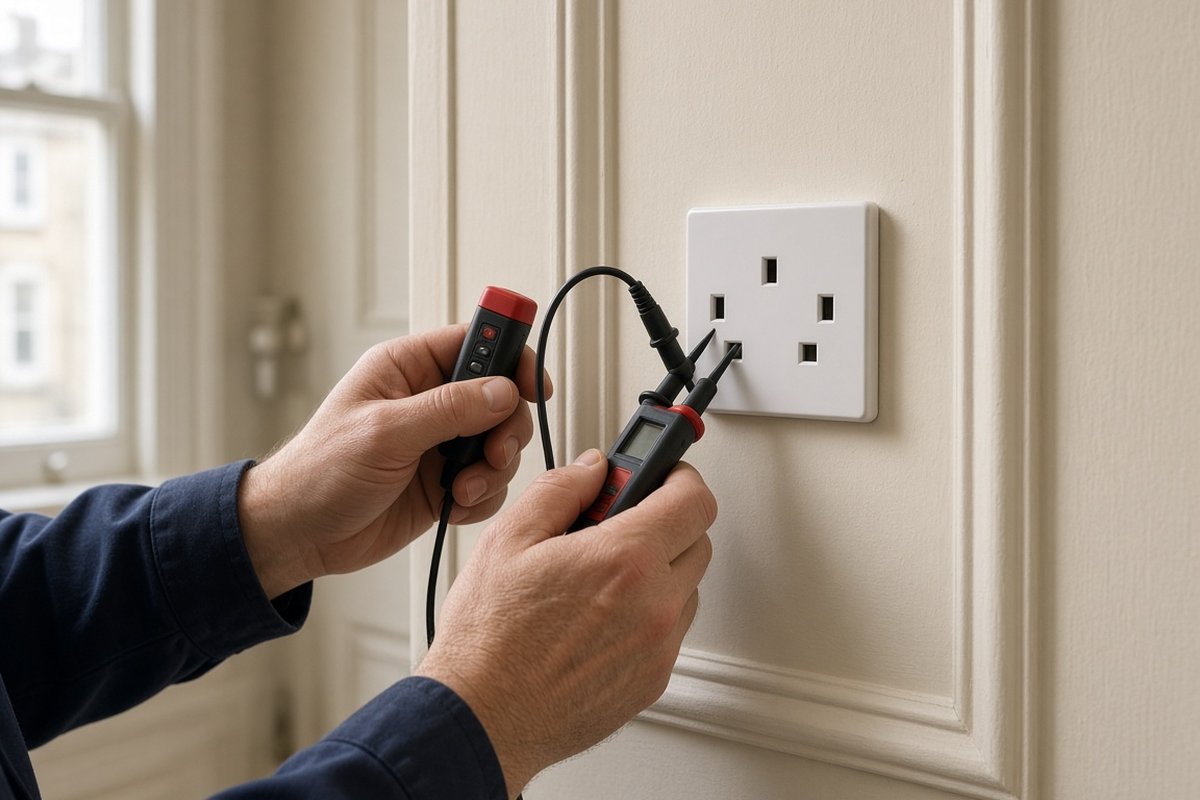
An Electrical Installation Condition Report (EICR) checks the fixed wiring in a building: the consumer unit, circuits, sockets, switches and fixed appliances. PAT testing (portable appliance testing) checks the things that plug into it: kettles, extension leads, heaters and so on. They answer different questions, and neither one replaces the other.
This guide explains what each test involves, what the paperwork shows, who is legally expected to have which, and how to decide which one you actually need for a home, rental or business in Bath.
Start With the Question, Not the Test
Before booking anything, be clear about what you are trying to find out:
- "Is the wiring in this building safe and up to standard?" That is an EICR.
- "Are the appliances people plug in safe to use?" That is PAT testing.
- "Why does my power keep tripping?" That is fault finding. An EICR may uncover the cause, but a targeted fault-finding visit is usually faster and cheaper.
- "Was the new work done properly?" That is answered by the certificate issued when the work was completed, not by a later inspection.
Most of the confusion we see in Bath comes from landlords who were told they "need a PAT test" when the legal requirement is actually an EICR, or homeowners who had a PAT test and assumed the wiring had been checked too.
How an EICR Works
An EICR is carried out to the national wiring standard, BS 7671 (the IET Wiring Regulations). The electrician inspects and tests a sample of the installation, which usually includes:
- A visual inspection of the consumer unit, accessories, cables that can be seen, bonding to gas and water pipes, and signs of overheating or damage.
- Dead testing with the power off: continuity of protective conductors, ring final circuit continuity and insulation resistance between conductors.
- Live testing: earth fault loop impedance, prospective fault current, polarity and RCD operating times.
- A written report listing every observation with a code and an overall verdict of "satisfactory" or "unsatisfactory".
A typical two or three bedroom house in Bath takes three to four hours. A large Georgian townhouse with several floors, a cellar and a converted attic can take most of a day.
How PAT Testing Works
PAT testing looks at individual appliances. The tester checks the plug, cable and casing for damage, confirms the right fuse is fitted, and for most items runs electrical tests for earth continuity and insulation. Each item gets a pass or fail and usually a label.
PAT testing does not tell you anything about the sockets the appliances are plugged into, the circuits behind them or the consumer unit.
Side-by-Side Comparison
| EICR | PAT testing | |
|---|---|---|
| What it checks | Fixed wiring, consumer unit, sockets, switches, fixed appliances | Plug-in appliances and leads |
| Standard used | BS 7671 | IET Code of Practice for In-service Inspection and Testing |
| Legal requirement for private landlords in England | Yes, at least every 5 years | No fixed legal requirement |
| Typical output | Coded report with satisfactory or unsatisfactory verdict | Item-by-item pass or fail list |
| Who usually needs it | Landlords, buyers, sellers, owners of older homes, businesses | Businesses, holiday lets, HMOs, offices, landlords who supply appliances |
The Codes on an EICR
Every observation on an EICR is given a code:
- C1, danger present. Immediate risk of injury. The electrician should make it safe before leaving.
- C2, potentially dangerous. Needs urgent remedial work.
- C3, improvement recommended. Not up to the current edition but not dangerous.
- FI, further investigation. Something could not be confirmed and needs to be looked at more closely.
Any C1, C2 or FI means the overall report is unsatisfactory. We explain the codes in detail in our guide to EICR codes C1, C2, C3 and FI.
Mistakes That Spoil Results
- Limiting the inspection too far. Some cheap EICRs test only a handful of circuits. The report should state the extent and any limitations clearly.
- Locked rooms and blocked cupboards. If the electrician cannot reach the consumer unit or a room, it gets recorded as a limitation.
- Treating PAT stickers as proof of safe wiring. They are not.
- Ignoring C3 notes forever. C3 items do not fail a report, but several of them often point to an installation nearing the end of its life.
When You Can Skip a Formal Test
If you have a single, specific fault, such as one socket that has stopped working, you do not need a full EICR first. A fault-finding visit will find and fix it. Equally, a homeowner with a recent installation certificate and no problems does not need a report every year. The usual guidance for owner-occupied homes is an EICR every 10 years or when the property changes hands.
How to Read the Summary Page
On the first pages of an EICR, look for:
- The overall assessment (satisfactory or unsatisfactory).
- The extent and limitations section: what was and was not tested.
- The recommended date for the next inspection.
- The schedule of observations with codes.
If the report is unsatisfactory, the remedial work should be listed clearly enough that another electrician could quote for it.
What Each Test Costs
Prices in Bath vary with the size of the property and the number of circuits. As a rough guide, an EICR on a small flat is often in the £120 to £180 range and a larger house £180 to £300 or more. PAT testing is usually priced per item, with a minimum call-out charge. A written quote should always come first. See our emergency electrician cost guide for how call-out and repair charges compare.
Frequently Asked Questions
Does a landlord need PAT testing by law?
Not as a fixed legal requirement in England. Landlords must make sure any appliances they supply are safe, and PAT testing is a common way to show that. The EICR for the fixed wiring is the legal requirement under the 2020 private rented sector regulations.
How long is an EICR valid for?
The report gives a recommended date for the next inspection. For private rentals in England that is at most five years. For owner-occupied homes, ten years is common, sooner for older installations.
Can an EICR fail because of one socket?
Yes, if that socket has a defect coded C1 or C2, such as a cracked faceplate exposing live parts. The fix is usually quick, and once it is done the electrician can confirm it in writing.
Will an EICR find the cause of my tripping RCD?
Sometimes, because insulation resistance testing often exposes a weak circuit. But a dedicated fault-finding visit focuses on the problem you have, so it is usually the faster route.
Get Testing That Answers a Real Question
If you are not sure whether you need an EICR, PAT testing or a fault-finding visit, our electrical fault finding service covers inspections and testing across Bath. Contact us and we will tell you which one fits.