
Emergency Electrician vs Regular Electrician: What the Terms Mean and What the Job Includes
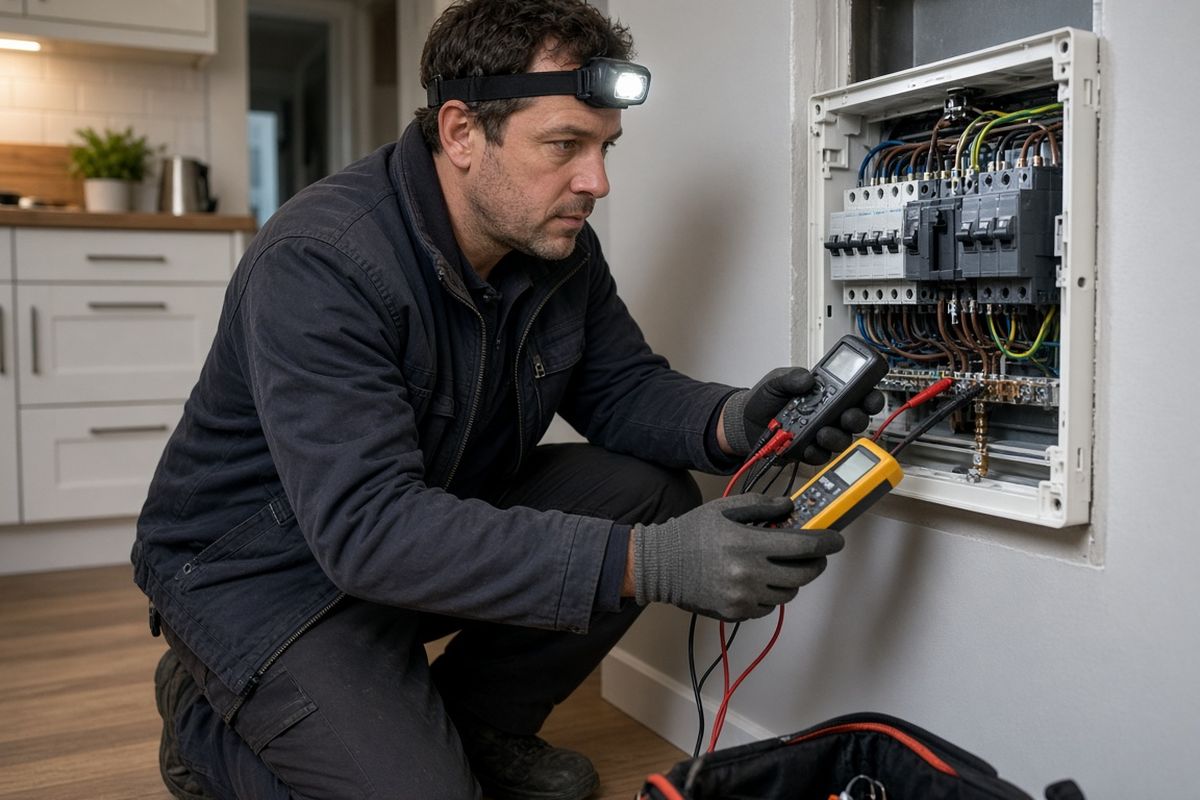
Every electrician can fix faults, but an emergency electrician is set up to respond quickly, at any time, with the equipment and parts to make a dangerous situation safe. This guide explains what counts as an electrical emergency, what an emergency electrician does differently, how pricing differs and when it is sensible to wait until normal working hours.
What Counts as an Electrical Emergency
| Situation | Emergency? |
|---|---|
| Burning smell, smoke or scorching from a socket, switch or fuse box | Yes |
| Sparks, crackling or buzzing from electrics | Yes |
| Water coming through lights or reaching the consumer unit | Yes |
| No power at all and it is not a network fault | Usually yes |
| RCD will not reset with everything unplugged | Usually yes |
| Exposed live wires or damaged fittings | Yes |
| One light not working | No |
| Adding a socket or new circuit | No |
| EICR or inspection | No |
If there is fire or smoke, call 999 first. If the whole street is off, call 105.
What an Emergency Electrician Does
The priority is safety:
- Triage on the phone: what happened, what is affected, any smell, heat or water.
- Advice to stay safe while they travel.
- Safe isolation of dangerous circuits on arrival.
- Fault finding to locate the cause.
- Repair if possible on the same visit, or make safe and book the repair.
- Testing before power is restored.
- Paperwork describing the work and anything else found.
See the emergency call-out process.
How a Regular Electrician Differs
A planned-work electrician focuses on installations, upgrades, inspections and non-urgent repairs, booked in advance. They may not answer the phone out of hours. The technical skills are the same; the difference is availability, response time and the stock of parts carried.
Pricing
Emergency work is usually charged by time, with a higher rate out of hours.
| Factor | Emergency call-out | Planned work |
|---|---|---|
| Pricing basis | Call-out or first hour, then hourly, plus parts | Often a fixed quote |
| Evening and weekend rates | Higher | Usually not available |
| Response | Same day, often within hours | Booked days or weeks ahead |
| Scope | Make safe and repair the immediate fault | Full job as planned |
See our emergency electrician cost guide.
Making Safe Now, Finishing Later
A sensible way to keep costs down is to make the installation safe tonight and do the rest during normal hours. For example, a scorched socket can be isolated in the evening, and the replacement fitted the next morning. A good emergency electrician will offer this when it is safe.
When You Can Wait
- One light or socket not working, with no smell or heat.
- A breaker that tripped once and reset fine.
- A planned upgrade, such as more sockets.
- An EICR or certificate.
Switch off anything you are unsure of, and book a normal visit.
Choosing an Emergency Electrician
- Check registration on the Electrical Competent Person register.
- Ask about the call-out charge and hourly rate before they come.
- Ask whether they carry common parts.
- Be wary of anyone who insists on a large fixed price before seeing the fault.
See how to choose an emergency electrician in Bath.
Frequently Asked Questions
Is an emergency electrician more expensive?
Out-of-hours rates are higher. Ask before booking.
Can an emergency electrician do planned work too?
Many can. Ask if you want follow-up work done.
What if the fault is the network?
Call 105. An electrician cannot fix network faults.
Should I call 999 for an electrical fault?
Only if there is fire, smoke or someone has had a serious shock.
Need an Emergency Electrician?
Call us 24/7 for emergencies across Bath. See our services.