
Safe Isolation Explained: Lock-Off, Proving Dead and Why It Matters
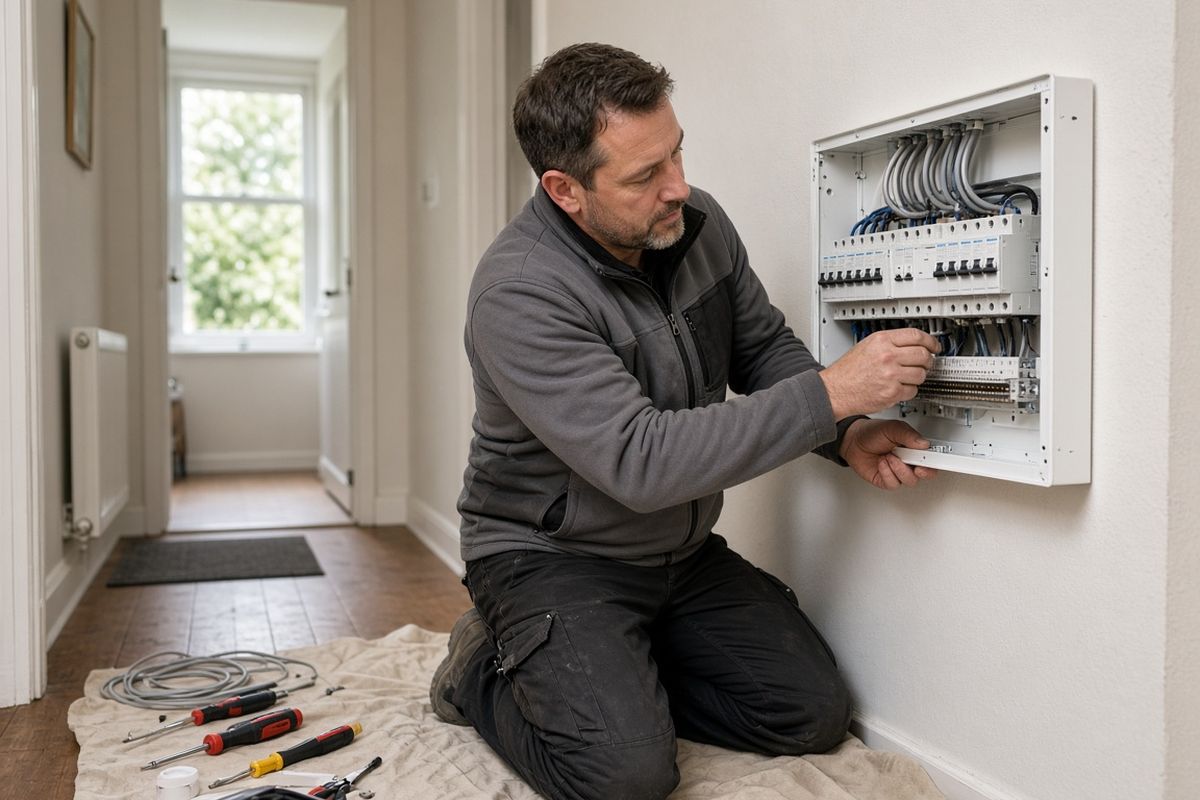
Safe isolation is the procedure electricians use to make sure a circuit is dead before they touch it. It is more than switching off a breaker: the circuit is identified, switched off, locked off and tested with a proven voltage indicator. This guide explains each step, why it matters, and why switching off at the wall is never enough.
Why It Matters
Many electrical injuries happen because someone believed a circuit was off. Circuits can be mislabelled, fed from more than one place or borrowed from another circuit. Safe isolation removes the guesswork.
The Steps
| Step | What happens |
|---|---|
| 1. Identify | Find the correct circuit and any other sources of supply |
| 2. Isolate | Switch off the protective device or isolator |
| 3. Secure | Lock off and attach a warning label |
| 4. Prove the tester | Check the voltage indicator on a known live source |
| 5. Test | Test between all conductors at the point of work |
| 6. Re-prove | Check the tester again on the known source |
| 7. Begin work | Only then |
Lock-Off Devices
A lock-off device clips onto the breaker so no one can switch it back on. The electrician keeps the key. A warning label explains who is working.
Voltage Indicators
Electricians use a two-pole voltage indicator that meets safety standards. Non-contact "pen" testers are useful for tracing but are not reliable for proving dead.
Borrowed Neutrals and Multiple Supplies
In older Bath homes, circuits are sometimes linked in unexpected ways. A light may share a neutral with another circuit, or a socket may be fed from two circuits. Safe isolation tests at the point of work so these hazards are found.
Isolation in an Emergency
In an emergency, a homeowner can switch off at the main switch to make things safer, but should still not touch damaged wiring. The electrician will carry out safe isolation on arrival before investigating.
Why Switching Off at the Wall Is Not Enough
A light switch only breaks the live on one side of the fitting. The fitting may still have live conductors, especially with older wiring or two-way switching. A socket switch only isolates what is plugged in.
Safe Isolation for DIY
If you replace a fitting like for like yourself:
- Switch off the circuit at the consumer unit.
- Lock it off or tape it and tell everyone.
- Check that the fitting is dead.
- If anything is unclear, stop and call an electrician.
See is DIY electrical work legal?
Common Isolation Mistakes
- Trusting labels: consumer unit labels are often out of date, especially after extensions or DIY.
- Assuming one circuit per room: a room may have sockets on two circuits and lights on another.
- Forgetting other sources: solar panels, battery storage and generators can keep parts of an installation live.
- Testing only live to neutral: a fault to earth can be missed unless every combination is tested.
- Leaving the board unattended: someone else may switch the circuit back on.
Solar, Batteries and Other Sources
More Bath homes now have solar PV, batteries and EV chargers. These can provide a second source of supply. Inverters and batteries have their own isolators, which must be switched off and checked as part of the procedure. Labels at the consumer unit and meter should warn of dual supplies.
Frequently Asked Questions
Is switching off the main switch safe isolation?
It isolates most circuits, but proving dead at the point of work is still needed.
Why did the electrician turn off all the power?
Sometimes for safety where circuits cannot be identified.
What is a lock-off device?
A clip that stops a breaker being switched on.
Are non-contact testers safe for proving dead?
No.
Need Safe Electrical Work?
Call us across Bath. See our services.