
Downlights Not Working: Failed Drivers, Bathrooms Above and Hidden Wiring Faults
When downlights stop working, the bulb is only one of several suspects. Failed LED drivers, old halogen transformers, loose connections, water from a bathroom above and heat trapped by loft insulation all cause the same symptom: a dark ceiling. This guide shows how to narrow it down safely, which checks you can do yourself, and when the fault needs an electrician.
How Downlights Are Wired
Most downlights are wired as a chain. The lighting circuit comes from the consumer unit to a switch, then runs from fitting to fitting across the ceiling, often through connectors or junction boxes hidden above the plasterboard. Each fitting may also have its own driver (for LEDs) or transformer (for low-voltage halogens) sitting loose in the ceiling void.
That layout explains most faults. If one fitting fails, only that light goes out. If a connection early in the chain fails, every light after it goes out. If a fault is causing current to leak to earth, the RCD trips and the whole circuit goes off. Knowing which pattern you have is the first step.
Start With the Pattern
| What you see | Most likely cause | Next step |
|---|---|---|
| One downlight out | Failed lamp, driver or connection at that fitting | Try a new lamp of the right type |
| Several in a row out | Loose connection or failed connector earlier in the chain | Electrician to trace the circuit |
| All lights on the circuit out | Tripped breaker or RCD, or a switch fault | Check the consumer unit |
| Lights flicker or pulse | Incompatible dimmer, failing driver, loose joint | Check dimmer type, then call |
| Lights trip the RCD when switched on | Water ingress, damaged cable, faulty fitting | Leave off and call |
| Lights work, then fail when warm | Overheating driver or fitting under insulation | Electrician to check heat and spacing |
Failed Lamps and the Wrong Replacement
Start with the simple check. Turn the lights off at the switch, let the fitting cool, and replace the lamp with one of the same type. GU10 lamps run at mains voltage; MR16 lamps usually run at 12 volts from a transformer. Fitting an LED lamp into an old halogen transformer often causes flicker or failure, because many older transformers need a minimum load the LED does not provide.
If you are not sure what type you have, take the old lamp to the shop or read the markings on its base. Never force a lamp into a fitting, and if the holder is brittle, scorched or loose, stop there and get it replaced.
LED Drivers and Halogen Transformers
Drivers and transformers fail with age and heat. The symptoms are usually one light that will not work even with a new lamp, a light that buzzes, or a light that flickers before going out. On older installations, several transformers may be failing at once after years of running hot.
Replacing a driver means opening the ceiling hole and disconnecting it from the mains wiring, so it should be done with the circuit isolated. If you are replacing several, it is often worth converting to integrated LED fittings with matched drivers, which run cooler and use less power.
Dimmer compatibility
A dimmer designed for halogen or incandescent lamps often causes LEDs to flicker, buzz or fail early. If problems started after changing lamps to LED, check that the dimmer is rated for LED loads and that the lamps are marked dimmable. This is one of the most common "fault" calls that turns out not to be a wiring fault at all.
Loose Connections in the Ceiling
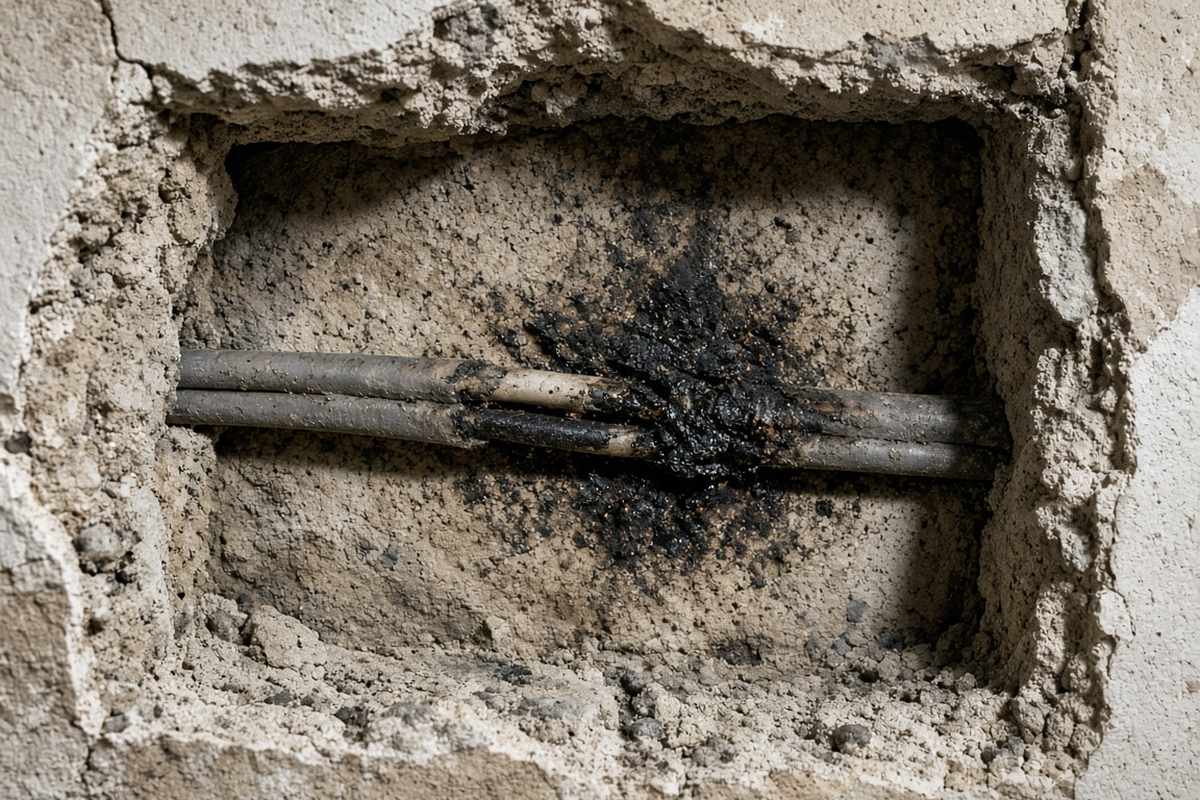
Connections between downlights are often made in small push-fit or screw connectors sitting on top of the plasterboard. If a screw loosens, the connection heats up, the plastic browns and eventually the circuit breaks. Everything beyond that point goes dark.
Signs of a loose connection include lights that flicker when someone walks across the floor above, a faint burning smell from one fitting, or a fitting that is discoloured. These faults should be traced and remade by an electrician, because a loose joint can overheat long before it fails completely. See ceiling lights flickering: causes.
Water From a Bathroom or Leak Above
Downlights in a kitchen or hallway ceiling below a bathroom are a classic route for water. A leaking shower tray, a failed seal round the bath or a loose waste pipe can drip onto the ceiling, run along the cable and come out through the nearest hole, which is usually a downlight.
If water is coming through a downlight, do not touch the switch. Switch off at the main switch if you can reach it without touching anything wet, stop the water and call an electrician. Wet fittings need to dry out and be tested before they are used again. See water leaking from a light fitting.
Heat and Loft Insulation
Older downlights, especially halogens, run very hot. When loft insulation is laid over them, the heat has nowhere to go. That shortens the life of lamps and transformers and can damage cable insulation. In the worst cases it scorches the plasterboard or nearby timbers.
Fire-rated or insulation-coverable downlights are designed for this, but many older fittings are not. If your downlights sit directly under insulation in the loft, have them checked. Covers or caps are available for some fittings, or the fittings can be replaced with types rated to be covered. See loft wiring dangers.
When the RCD Trips With the Lights
If switching on the lights trips the RCD, there is a fault causing current to leak to earth. Common causes are water in a fitting, a nail or screw through the lighting cable, or a failed driver. Leave the lights off and use other lighting until the circuit has been tested. Resetting repeatedly will not fix the fault and can make it harder to trace.
What an Electrician Does
A methodical electrician will:
- Isolate the lighting circuit and prove it dead.
- Test the circuit to see whether the fault is a break, a short or leakage to earth.
- Open fittings in a logical order to find the faulty joint, driver or lamp holder.
- Repair or replace the faulty part and remake connections properly.
- Test again before switching back on, and recommend any upgrades, such as fire-rated fittings or an LED-compatible dimmer.
Frequently Asked Questions
Why do my LED downlights keep failing?
Usually heat, an incompatible dimmer or a cheap driver. Check whether the fittings are under insulation and whether the dimmer is LED-rated.
Can I replace a downlight myself?
Replacing a lamp is fine. Replacing a fitting or driver involves the mains wiring, so it should only be done by someone competent with the circuit isolated. If you are unsure, call an electrician.
Why did all my downlights go out at once?
Either the circuit has tripped at the consumer unit, or a connection or switch at the start of the chain has failed. Check the consumer unit first. See how to find what is tripping your electrics.
Are downlights a fire risk?
They can be if they overheat under insulation or have loose connections. Fire-rated fittings and correct spacing reduce the risk.
Downlights Still Not Working?
If new lamps have not solved it, or the lights trip, flicker or smell, call us. Our fault finding service traces lighting faults across Bath homes.