
What Size Consumer Unit Does a House Need? A Ways-and-Circuits Guide
A consumer unit's size is measured in "ways": the number of single-width slots for circuit breakers. Most two to four bedroom houses need somewhere between 10 and 18 usable ways once you allow for every circuit, the RCD or RCBO arrangement, surge protection and a few spare slots.
This guide explains how to count the circuits you have, how different layouts use up space, and why leaving room for the future saves money when you add an EV charger, electric shower or garden office.
Start With the Circuits You Have
Every circuit in the house needs its own protective device. Typical circuits in a Bath semi or terrace include:
- Two or three lighting circuits (often one per floor)
- Two or three socket circuits (ring or radial)
- A cooker or oven circuit
- An electric shower circuit
- An immersion heater circuit
- A boiler or heating controls supply
- Smoke alarms (sometimes on the lighting circuit)
- Outbuildings, garden sockets or a garage
A large Georgian townhouse over four or five floors can easily have 15 or more circuits.
How Ways Are Used
Ways get used up faster than people expect:
| Item | Ways used |
|---|---|
| Main switch | 2 |
| Each RCD (split-load boards) | 2 |
| Each MCB | 1 |
| Each RCBO | 1 (some types 2) |
| Surge protection device (SPD) | 1 to 2 |
| AFDD (where fitted) | 1 to 2 |
A board labelled "18 way" may only have room for 10 to 12 circuits once the main switch, RCDs and surge protection are fitted.
Split-Load vs Full RCBO Boards
- Split-load boards use two RCDs, each protecting a group of circuits. They are cheaper, but one fault trips half the house.
- Full RCBO boards give each circuit its own combined breaker and RCD. A fault on the kitchen sockets only trips the kitchen sockets. They cost more but make faults easier to find and are far less disruptive.
For most homes in Bath we recommend RCBOs, particularly where there are freezers, medical equipment, home offices or tenants. See RCD vs RCBO explained.
Local Housing Matters
Bath has a lot of older properties that have been altered many times. It is common to find:
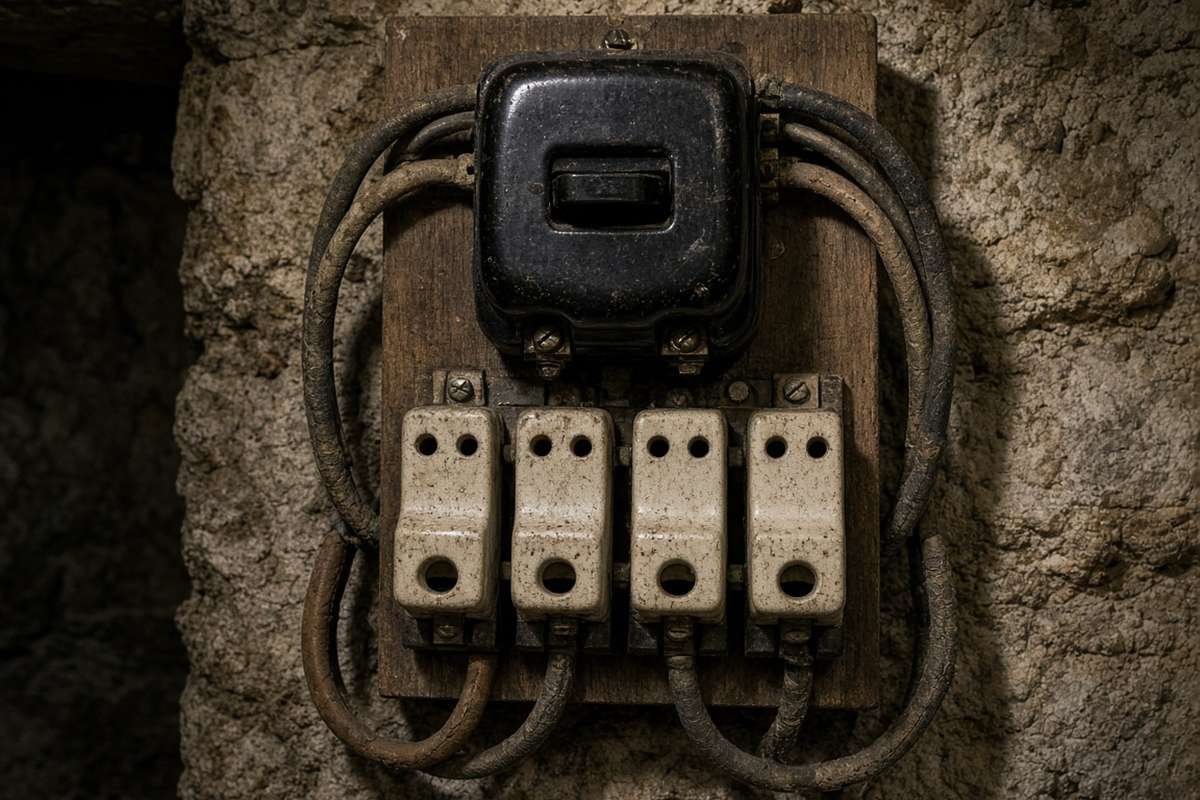
- Two or more old fuse boxes feeding different parts of the same house.
- Flats in converted townhouses with the consumer unit in a shared hallway or cellar.
- Extensions and loft conversions added on their own small boards.
When we replace a consumer unit we often consolidate these into one board, which needs extra ways.
Leave Room for the Future
Plan for at least two to four spare ways. Common additions include:
- EV chargers, which need a dedicated circuit and protection.
- Electric showers, which need a large dedicated circuit.
- Heat pumps and battery storage.
- Garden offices and outbuildings.
Adding a second board later is possible, but it costs more than fitting the right size first time.
Metal Enclosures and Location
Since 2016, consumer units in homes have had to be made of non-combustible material, which in practice means metal. They should be somewhere accessible, not behind fixed furniture, and away from heat and water. See our guide to the fuse box under the stairs for common access problems.
When a Bigger Board Is Not Enough
If the supply itself is the limit, a bigger consumer unit will not help. Older homes may have a 60 A main fuse, and adding an EV charger, electric shower and heat pump can exceed it. In that case the distribution network operator may need to upgrade the supply. We check this before quoting.
Frequently Asked Questions
How many ways does a three bedroom house need?
Usually 12 to 16 usable ways with RCBOs, plus space for a surge protector and two to four spares.
Can I add a breaker to my existing consumer unit?
If there is a spare way and the board is in good condition, often yes. Adding a new circuit is notifiable under Part P, so it should be certified.
Is it worth upgrading to an RCBO board?
For most households, yes. One fault no longer takes out half the house, and it is much easier to find the faulty circuit.
Does a new consumer unit need building control approval?
Replacing a consumer unit is notifiable work under Part P. It must be notified to building control, either directly or through a registered competent person scheme.
Need a New Consumer Unit?
If your fuse board is full, old or keeps tripping, our consumer unit replacement service covers sizing, fitting and certification. Contact us for a quote.