
Signs of Faulty Wiring Behind Walls and When to Open the Wall
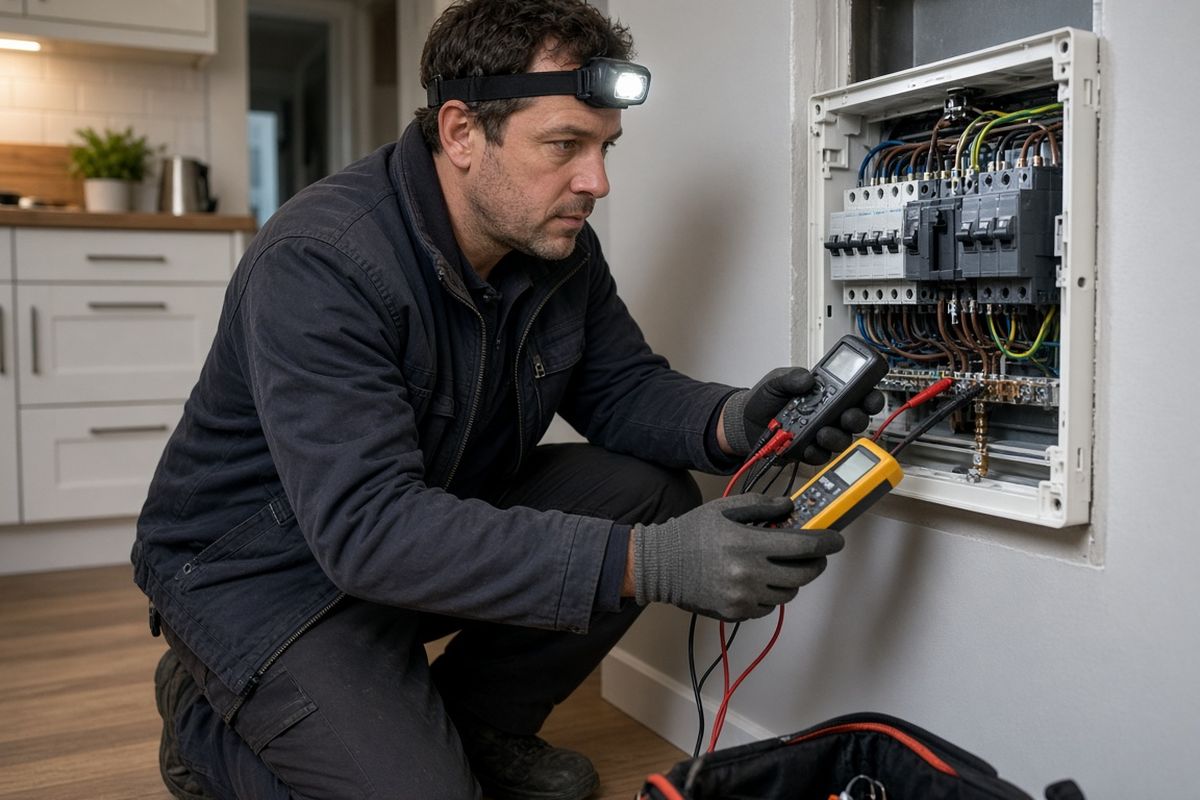
Most wiring is hidden behind plaster, under floors and above ceilings, so faults are rarely seen directly. Instead, they show up as warning signs: warm switch plates, flickering lights, buzzing, burning smells or breakers that keep tripping. This guide lists the signs of faulty wiring behind walls, what causes them and how an electrician finds the fault without unnecessary damage.
Warning Signs
| Sign | Possible cause | Urgency |
|---|---|---|
| Burning or fishy smell | Overheating connection or insulation | Urgent |
| Warm or discoloured socket or switch | Loose connection or overload | Urgent |
| Buzzing or crackling | Arcing or loose connection | Urgent |
| Lights flickering on several circuits | Loose neutral or supply issue | Soon |
| Frequent trips | Insulation breakdown, damage or overload | Soon |
| Shocks from switches or appliances | Earth fault | Urgent |
| Sockets not working | Broken or loose cable | Soon |
| Scorch marks on walls | Overheating behind the plaster | Urgent |
Common Causes
Ageing Insulation
Rubber-insulated cables from before the 1960s become brittle and crumble. Lead-sheathed cable may also be found in older Bath homes.
Loose Connections
Connections in back boxes and junction boxes can loosen with heating and cooling, causing heat and arcing.
Physical Damage
Nails, screws and drilling during DIY often hit cables. See cables damaged under floorboards.
Rodents
Mice and rats chew cables, particularly in lofts, cellars and under floors.
Water
Leaks and damp corrode connections and break down insulation.
Overloading
Running too much on one circuit causes cables to overheat.
What to Do
- Stop using the affected circuit.
- Switch it off at the consumer unit.
- If there is a burning smell, smoke or heat, switch off at the main switch and call us.
- Do not open walls or fittings yourself.
How an Electrician Finds Hidden Faults
- Insulation resistance testing shows whether a cable is breaking down.
- Continuity testing finds broken or high-resistance conductors.
- Thermal imaging can show heat from a failing connection.
- Circuit tracing locates cable routes and junctions.
- Sectioning isolates parts of a circuit to narrow down the fault.
This means only a small area of wall usually needs opening. See electrical fault finding.
Repair or Rewire?
| Finding | Usual approach |
|---|---|
| One damaged cable | Repair with a proper joint or new section |
| One loose connection | Remake the connection |
| Several circuits with poor insulation | Partial rewire |
| Old rubber or lead cable throughout | Full rewire |
See signs your house needs a rewire.
Bath Homes and Hidden Wiring
Lime plaster in older Bath homes needs care when opening walls. See rewiring old lime plaster walls. Listed buildings may need consent for some changes.
Frequently Asked Questions
Can faulty wiring cause a fire without warning?
It can. RCDs and smoke alarms help, but warning signs should never be ignored.
Is a warm socket dangerous?
A socket that feels warm without heavy use should be checked.
Will finding the fault damage my walls?
Usually only small openings are needed.
How often should wiring be checked?
Every 10 years for owner-occupied homes, every 5 for rentals.
Worried About Hidden Wiring?
Call us for fault finding across Bath. See our services.